Some workflows are too important to keep stitching together by hand.
When a workflow carries enough value, complexity or repetition, we can turn the narrow mechanism into software of its own—not a generic AI app, but a focused product for that job.
The product makes the workflow consistent. Your team keeps the consequential decisions.- 01EmailRequests↓
- 02SpreadsheetRules↓
- 03CRM + SlackContext↓
- 04ChecklistHuman memory↓
- 05Focused productOne working interface
One mechanism. Four recognisable moments.
Select a business to see how the same underlying failure changes shape.
A senior diagnostic becomes a repeatable tool.
Clients can complete the structured work without consuming the expert’s afternoon.
See the industry workflow- 01WorksheetManual↓
- 02RulesTacit↓
- 03ToolFocused
See what changes when the workflow holds together.
The product is not the idea. It is the narrow workflow made dependable.
The moment loses context, time or ownership.
The product makes the workflow consistent. Your team keeps the consequential decisions.Focused systems for the moments that matter.
Each pattern addresses one important handoff and keeps the final decision with your team.
Focused internal tools
Replace a fragile multi-tool process with one controlled working surface.
Specialist search
Build retrieval around a corpus where source fidelity and domain language matter.
Workflow products
Turn a repeated service mechanism into software people can use directly.
Decision-support interfaces
Show evidence, options and trade-offs without making the decision for someone.
Domain-specific applications
Encode the rules, vocabulary and exceptions generic software cannot hold.
See the workflow details
The spreadsheet stopped being a spreadsheet and became the process
Somebody built it once, quickly, to get through a week. Then it worked, so it stayed — and four years later it is where quoting happens, or sizing, or matching, or scoring. New hires are trained on the tabs rather than on the policy, because the tabs are the policy now. Nobody planned this and nobody is embarrassed by it: the file is genuinely good, and it encodes real judgement that no vendor product contains. What it does not have is any of the things software has. There is no version anybody agreed on, no test that fails when a formula is wrong, no record of who changed what, and no way to improve it without the one person who understands which cells are typed and which are calculated. The risk is not that the file is bad. It is that the business has quietly made one person’s local copy load-bearing, and nobody chose that either.
Four vendors covered everything except the part that is the business
The evaluation goes the way these usually go. Four products are shortlisted, the demos are competent, and each one handles the intake before the step and the reporting after it. Then somebody asks how it does the middle — the calculation, the match, the judgement the business is actually paid for — and the answer is a configuration project, a professional-services line item, or an export to a spreadsheet. So the real choice is between bending the business to fit a tool that does not do the important part, and paying a licence that rises with headcount for as long as the company runs on it. Both are defensible. What usually goes unpriced is the third option, because nobody in the room has a number for it, and a licence with a monthly figure always feels more responsible than a build without one.
The most valuable thing the business does is given away as a PDF
Plenty of firms have something their market genuinely wants and no way to sell it. It is the audit, the calculator, the readiness check, the diagnostic — a piece of structured expertise that a senior person currently performs by hand, one prospect at a time, and then emails out as a document. It works as marketing, which is why it survives: people ask for it. But it costs a senior person’s afternoon every time, it can only be delivered as fast as that person has afternoons, and the version a prospect receives depends on who happened to do it. The reason it stays a PDF is not that nobody has thought of productising it. It is that turning it into something a customer can use unaccompanied means deciding what it is allowed to say without a human present — and that is a commercial and professional judgement, not a technical one, so it gets deferred.
It launched, it worked, and eleven months later three people use it
This is the failure worth naming before anything is built, because it is the common one and it is not a technology failure. A custom tool ships, it is genuinely better than the spreadsheet, and fourteen people use it every day for a month. Then the business changes slightly — a new fee, a new region, a rule that now has an exception — and the tool does not, because there is no route to ask for a change and nobody inside the business was given it to own. People work around it once, then twice, then stop opening it. Eleven months later three people still use it, the ones who were in the room when it was built, and the money is spent. Everything expensive here happened after launch, which is why ownership and a release process are part of the engagement rather than an afterthought to it.
System support
- Applying the pricing, sizing, eligibility or scoring rules the business already applies by hand
- Extracting the fields somebody currently retypes out of a document, a form or a message
- Producing the draft output — the quote, the estimate, the plan, the summary — in the format it is already sent in
- Checking its own output against the constraints the business wrote down, and refusing when it cannot clear them
- Showing its working, so a reviewer can see which inputs produced which number
- Recording every case it settled and every case a person overrode it on
- Absorbing the volume that turns the current process into a bottleneck rather than a task
Your team decides
- Deciding what the product is for, and what it will deliberately never do
- Setting the boundary between what it settles alone and what it hands to a person
- Any professional, clinical, legal or licensed judgement inside the workflow
- Setting price, terms, and what the business is willing to stand behind in writing
- Approving anything the product shows a customer under the business’s name
- Deciding when the product is wrong, and whether it is changed, paused or retired
- Owning it after launch — the change requests, the questions, the version people actually open
- Deciding whether this should be software at all
See what exists today.
Explore related products, case studies, internal builds and clearly marked system concepts.
Predictive Analytics Engine
ML-powered demand forecasting and inventory optimization platform reducing waste by 34% and saving $8.7M annually for a retail chain.
View case studyTokenized Asset Platform
Built smart contracts, wallet flows, admin dashboard, and compliance-ready architecture for a real estate tokenization platform across three jurisdictions.
View case study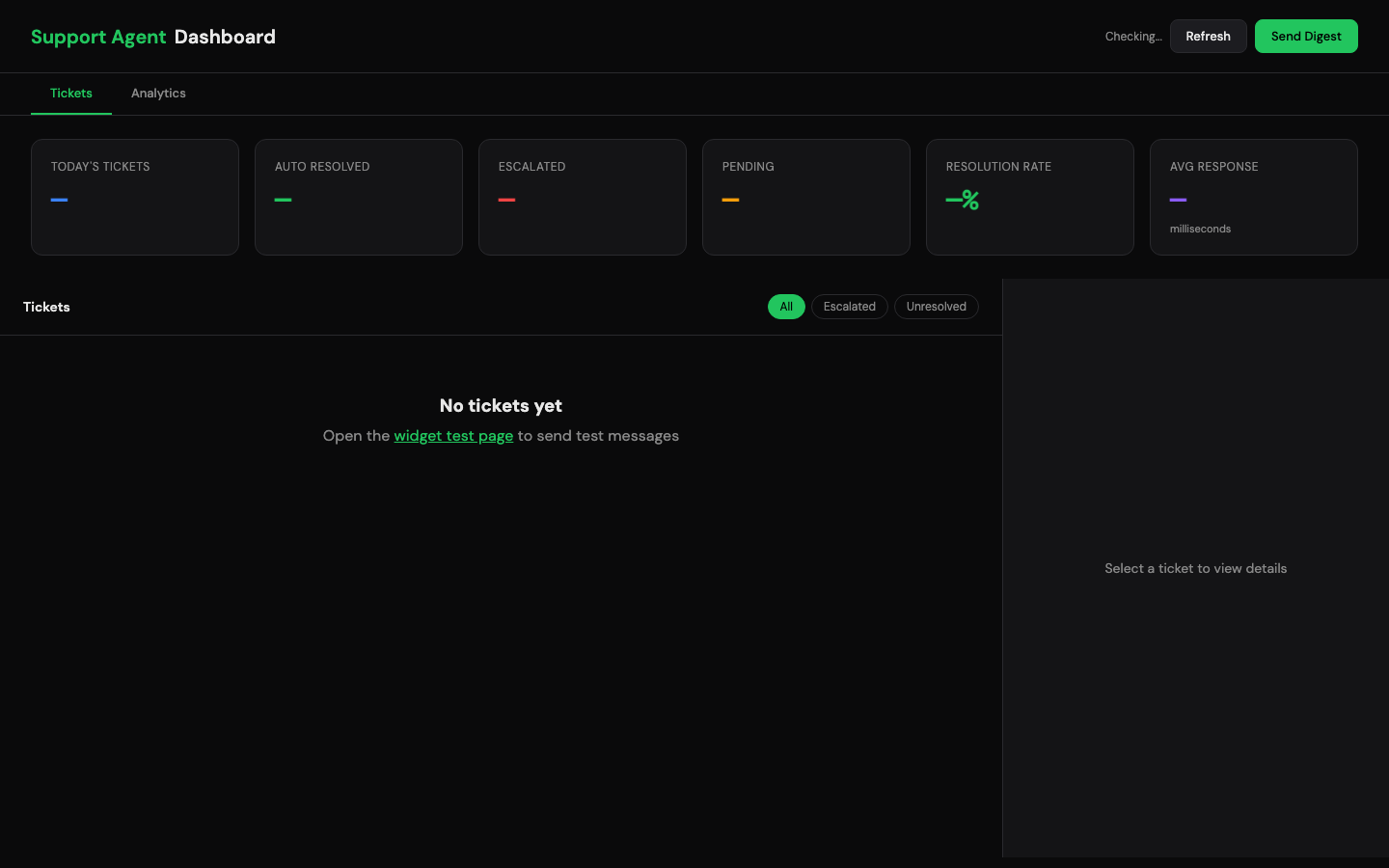
Shopify AI Support Agent
Commerce support answers depend on live order, product, policy and customer state spread across different systems.
See What We’ve Built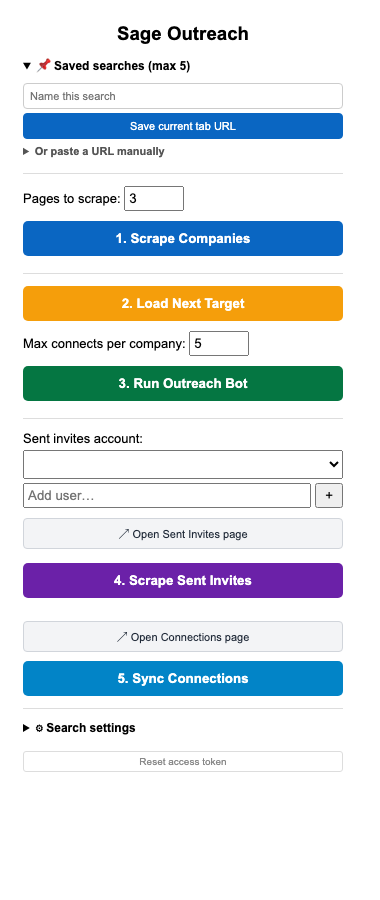
Sage Outreach
A focused B2B outreach session requires company collection, decision-maker discovery, controlled actions and acceptance tracking across repeated browser steps.
See What We’ve BuiltFinfluencer Credibility Tracker
Market calls made in social posts are difficult to extract consistently and verify against what prices later did.
See What We’ve BuiltGuru Vachan — Sacred Text Search
A reader looking for what a specific teacher said about a specific idea has to search dozens of books by keyword, and a paraphrasing assistant is unacceptable when the source text is sacred.
View SystemHave a workflow worth making dependable?
Show us what happens today. We’ll help you decide whether a focused system is worth building.